|
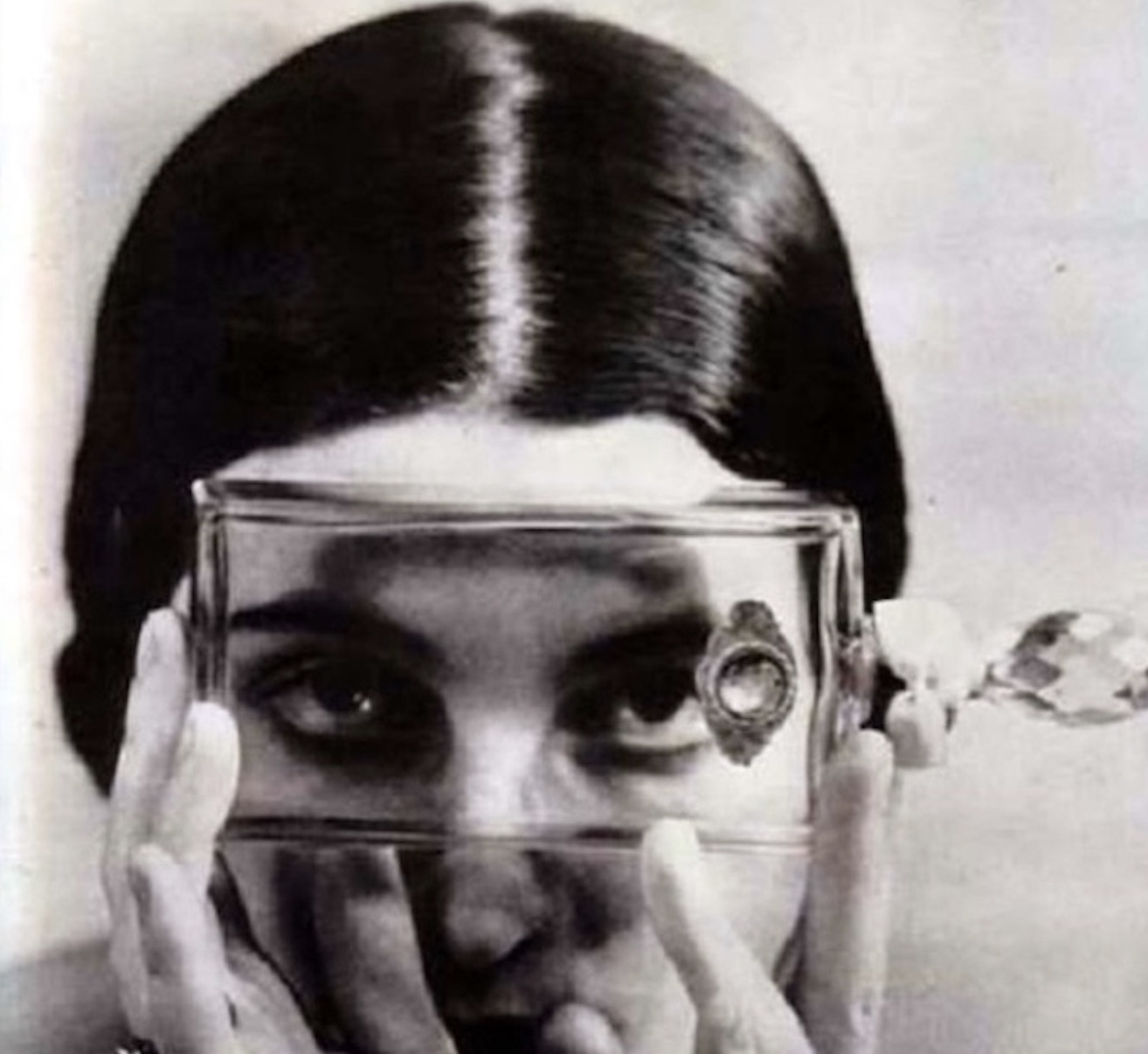
header image: [detail] Alexander Rodchenko, 1930, "Portrait with Flacon"
[caption]: the journal
of visual cultural studies emerges from the collision of theory
and spectacle. Annual, audacious, and gloriously
hybrid, it stages encounters between scholarship
and image-making—where Arbus’s restless gaze,
Basquiat's eloquent canvas-borne utterances, meet
the ghosts of Benjamin, Mulvey, Berger, Sontag,
and Stuart Hall.
A publication as alive as the media
it studies, [caption] invites
artists, critics, and cultural troublemakers to
think with their eyes: to dissect cinema,
architecture, photography, fashion, design, and the
ever-mutating semiotics of the silver screen.
Part gallery, part
think tank, part cultural séance, [caption]
insists that looking is never innocent, that
every image is an argument, every theory a pose.
Imagine a magazine/journal that blends
the look of Warhol's Interview Magazine, the
smarts of the journal Camera Obscura, the
visual cultural studies amazingness of John Berger
et al's Ways of Seeing, of Marshall
McLuhan's and Quentin Fiore's The Medium is the
Massage. Oversized, loud, bold, and
unapologetic, [caption] is where vision
becomes discourse, and discourse dares to look back.
Close your eyes and think of a
journal-magazine/chimera that fuses DNA from Camera
Obscura, the old Lingua Franca, Interview
Magazine, the long lost Life Magazine, Ray-Gun,
and more! All that is [caption].
First Analog Issue, June 1, 2026;
Digital Issue, NOW, here, alive,
evolving-before-your-eyes, and forthcoming, analog.
[caption]
1, call for papers/photography/art
etc is NOW LIVE!

|
ARTIFACT #1
5 November 2025
Caption

“Estados Jodidos”
2007, mixed media on canvas
4' x 6'
Izel Vargas
CAPTION:
Tex[t]-Mex: Seductive Hallucinations of
the "Mexican" in America introduces the concept of
"Xicanosmosis," a mouthful of a word that fuses the ideas of "Chicano" with
"osmosis" -- sort of a shorthand way of talking about what happens
when the cultures and histories of the United States and Latin America
combine, clash, fuse, and frolic.
Izel Vargas's amazing
paintings embody the odd, symbiotic dynamics
of xicanosmosis
in ways that my book just can't match.
"Estados Jodidos" is
one of my favorite works in my private collection of art. Izel Vargas
shared an anecdote with me about what
happened when "Estados Jodidos" was first
displayed in public.
"What was
funny was that no one knew what "Estados
Jodidos"* meant,
except for the occasional
Spanish-speaking passerby, which happened to be the Latino
workers that were employed near and around the storefront.
When I was asked about it, the
conversation
quickly turned into a one about
immigration in North Carolina -- some of the surrounding counties
had been passing laws that didn't allow workers to hang out in
certain areas, limited taco truck
vending, and gave
cops the power to detain for ICE
officials anyone they identified as illegal.
Most Latino immigrants didn't understand
these laws mainly
because of a language barrier, which in
turn added more
mistrust that had already permeated
within the community. This is how 'Estados Jodidos' came to
be."
[* A Spanish-language pun
on "Estados Unidos" or The United States,
"Estados Jodidos" means "The Fucked
States"]
|
|
Breaking News
Rando
sites & cool vis/cult stuff we have
our 👁️
on!
Contributor:
Janesa Brosnan
Caption: AnOther
Magazine showcases
modern artists and photographers that focus
on the new. This is their 2025 article on up
and coming photographers challenging and
reinventing what fashion means. Their more
current articles showcase features on people
shaking up the industry.

Contributor: Joey King
https://store.mcsweeneys.net/products/mcsweeney-s-78-the-make-believers?taxon_id=5
main site: http://www.mcsweeneys.net
Caption: I’ve
been completely engrossed in issue
78 of McSweeney’s
Quarterly Concern, which I
subscribed to recently. “The Make
Believers” is brought to us by a
group of Vietnamese writers. It’s
funny, heart-wrenching,
compelling, and I feel like I’ve
learned so much more about
Vietnamese culture in the diaspora
from it all.

Contributor: Joey King
https://www.eleetwarez.net/ljrr

Caption: Jared Stanley’s live
exhibition “La Jolla Reading Room”
recently showcased in SDSU’s Digital
Humanities Center. Chatter emanates from
multiple perspectives within Stanley’s
labyrinth-like exhibit; remixing notions of
the ‘quiet’ library while narrating stories
that become all the more circuitous each
time they’re heard.
Contributor: Bill Nericcio
https://read.dukeupress.edu/camera-obscura

Caption: "The journal changed
my career and, in a way, my life ... When
they elected to
publish my scribblings on Speedy
Gonzalez and Pee-wee Herman, the
opportunities for me and my published forays
expanded dramatically."
Contributor:
Bill Nericcio
https://www.lensculture.com/articles/daesung-lee-nirvana

Caption:
Lens Culture pursues the kind of deep
image analysis that lights our fire! If
you like LENS CULTURE, you may well adore
[caption].
Contributor: Raine Porath
https://anthology.rhizome.org/

Caption:
Rhizome’s Net Art Anthology preserves the
life of classic net art and e-lit bangers.
We're building [caption] as a vibrant
homebase for the next age of e-lit classics.
Contributor:
Bonnie Palos
https://huizachemag.org
Caption:
though mainly known as a purveyor of amazing
Chicana/o/x and Latinx literature, HUIZACHE,
also displays a savvy visual talent that
caught my eye and keeps bringing me back to
the site. Dagoberto Gilb & company are
curating an evolving site for short fiction,
poetry, and more.
Contributor: Bill Nericcio
http://sdsupress.sdsu.edu/caption/1931-heartfield-possessions-les-plus-precieuses-3-1-2560x1575.jpeg
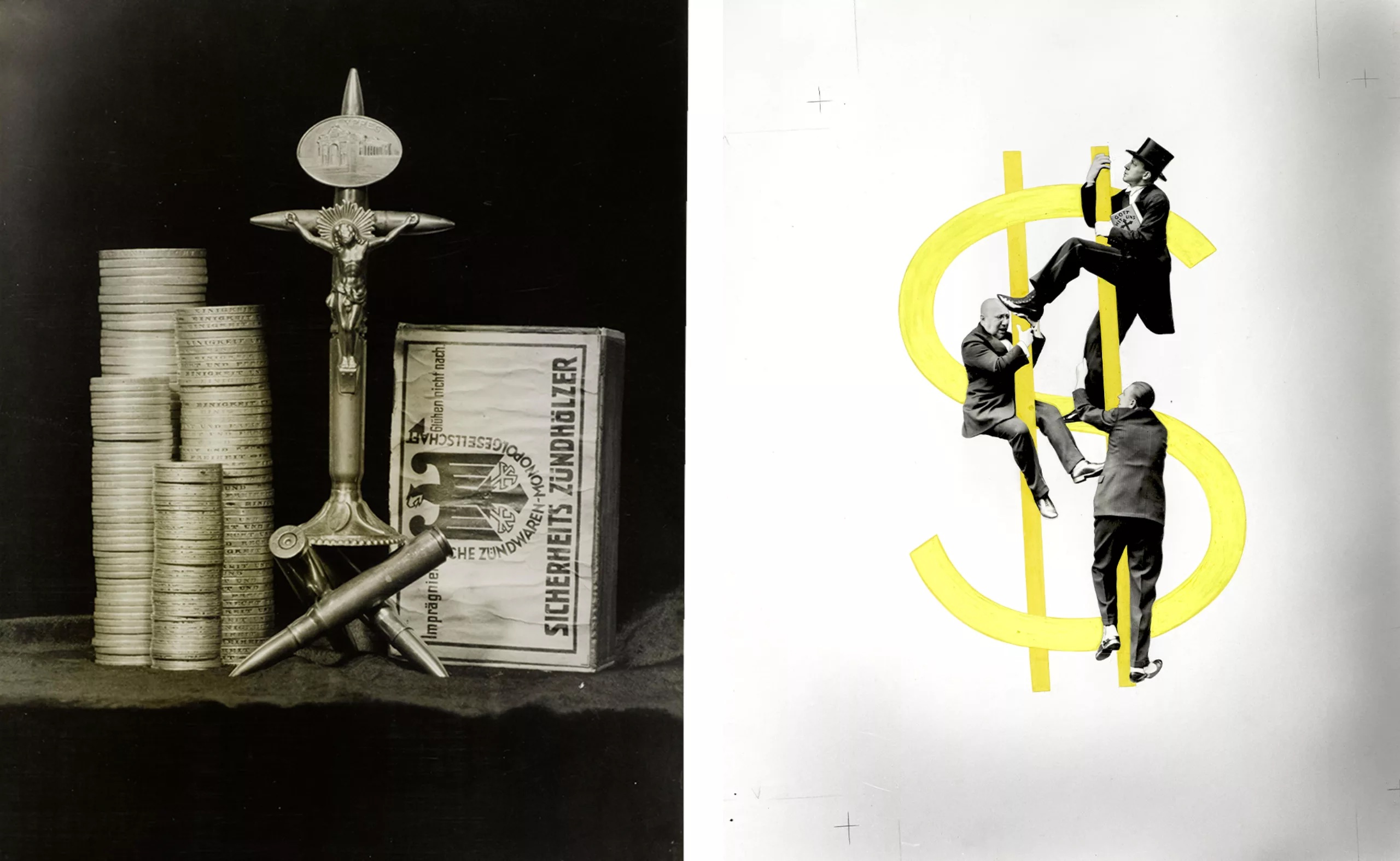
Caption:
More to add soon -- this site embodies the
#goals of our evolving enterprise. GRAPHEINE
is sharp! We feature one of their stunning
illustrations highlighting the work of the
20th century king of photomontage, satire,
and graphic innovation: John Heartfield.
Contributor:
Bill Nericcio
https://www.hilobrow.com/
Caption: Hilobrow is a p(HiLo)sophical
rumination engine – a wild cornucopia of
pop-cultural exegesis, visual theory
junkets, and graphic enthusiasms that
refuses the sterile sepulchers of academe.
Edited by Joshua Glenn, semiotician,
zinemaker, and progenitor of Hermenaut’s
ghostly DNA, Hilobrow gathers obsessives
dissecting comics, design, film,
proto-sci-fi, and iconographies in their
radiant and shadowed permutations. It
doesn’t just study culture, it inhabits its
semiotic sutures, mapping the cracks between
high and low, image and idea, punk and
poetics, until the whole spectacle shimmers
in paradox. This is visual culture as joyous
detour from the banal and boring.
|
|
Caption ZINE
A Soon to be Open Access Artkive
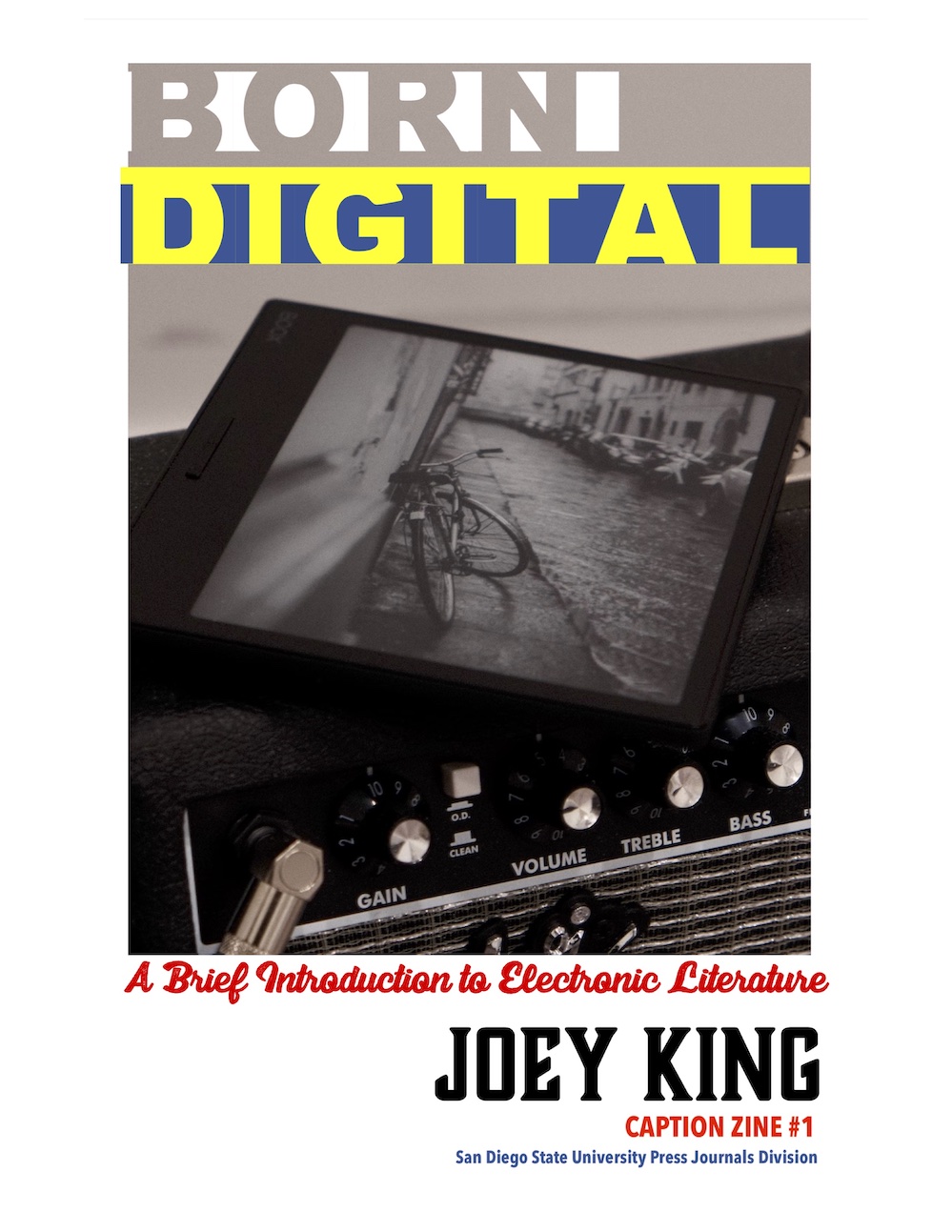
Born
Digital
A Brief Introduction to Electronic
Literature + Resource Guide
source
| Joey King, author/compiler/researcher
CAPTION:
Electronic Literature is Literature
without Boundaries; Electrifyingly,
omnipresently forging new pathways to
help us make sense of our
ever-increasingly virtual, AI-Prompted
Future. When I entered the M.A.
Program in English and Comparative
Literature in the fall of 2023,
returning to academia full-time after
nearly fifteen years in the corporate
world, a friend of mine asked why I’d
want to study for a graduate degree in
this particular discipline when “books
are dead.” His question stuck in my
craw—mostly because I knew that books
weren’t “dead,” nor was the study of
literature in the twenty-first
century. Still, this general sentiment
wasn’t unique to him. It seemed to
capture the way literary studies has
come to be dismissed in a culture
ironically dominated by digital
narratives and the identities people
construct and perform across social
media, broadcasted to the world.
English departments have long been the
place where culture gets read and
unraveled. And stories—whether bound
in print or stitched together by
hyperlinks, hashtags, or AI-generated
prompts—have always been our terrain.
What drew me back to literature wasn’t
nostalgia; it was a sense that this
field, at places like SDSU in
particular, was reorienting itself
toward the future with curiosity,
urgency, and care.
|
|
|
CAPTION
ALLIES/ILK/BREED/BRAND
References
eLit Archives
The Next
Pathfinders Project
The Electronic Literature Directory + Knowledge Base
Rhizome / Net Art Anthology
UPenn Electronic Poetry Center Library + conference archive
Consortium on Electronic Literature
CYBERIA
netart.org.uy / notart + ar(t)chives
NetArt Latino Database
Interactive Fiction Archive
https://itch.io/
Eastgate Systems / StorySpace
The ELO's Electronic Literature Collection (volumes 1-4)
eLit Netprov from Mark Marino and Rob Wittig on Reddit
about Photos/Captions/Rewrites (also on IG)
eLit Publications
Hyperrhiz c2005
The New River c1996
ALTX c1993
BeeHive
Poiesis
Cartografía Digital
Filter - zine for electronic literature, entirely housed on Instagram
Open Source Publications
Dancecult Journal
Re*Mediate
Electronic Literature Review
Electronic Book Review
the AI Literary Review - a journal of new poetry, created by humans, utilising artificial intelligence
Ensemble Park - primarily print-based with process notes and interviews. collects literary experiments in human-computer co-writing
Open Source Platforms/Distributors
https://radicaloa.postdigitalcultures.org/about/
Open Journal Systems
Directory of Open Access Journals
|
|
MASTHEAD
managing editors:
William Nericcio, MALAS @ SDSU
Joey King, MA, ECL @ SDSU
Evan Shulman, MA Candidate, MALAS
Raine Porath, MA Candidate, MALAS
Bonnie Palos, PhD, Ohio State
Toki Lee, MA/PhD, UMass Amherst
editorial
board:
William
"Memo" Nericcio, SDSU
Carlos
Kelly, Kennessaw State University
Chris
Gonzalez, Chair, English, SMU
Katlin
Marisol Sweeney Romero, UC Davis
Quentin
Bailey, Chair, ECL @ SDSU
Toki
Lee, MA/PHD Program, UMASS Amherst
Bonnie
Palos, PHD Program, the Ohio State U.
Frederick
Aldama, UT Austin
Jessica
Pressman, ECL @ SDSU
Y
Howard, ECL @ SDSU
Kristin
Bivona, Humanities @ SDSU
interns:
Janesa Brosnan, ECL @ SDSU
recent pieces: blumenfeld;
ward
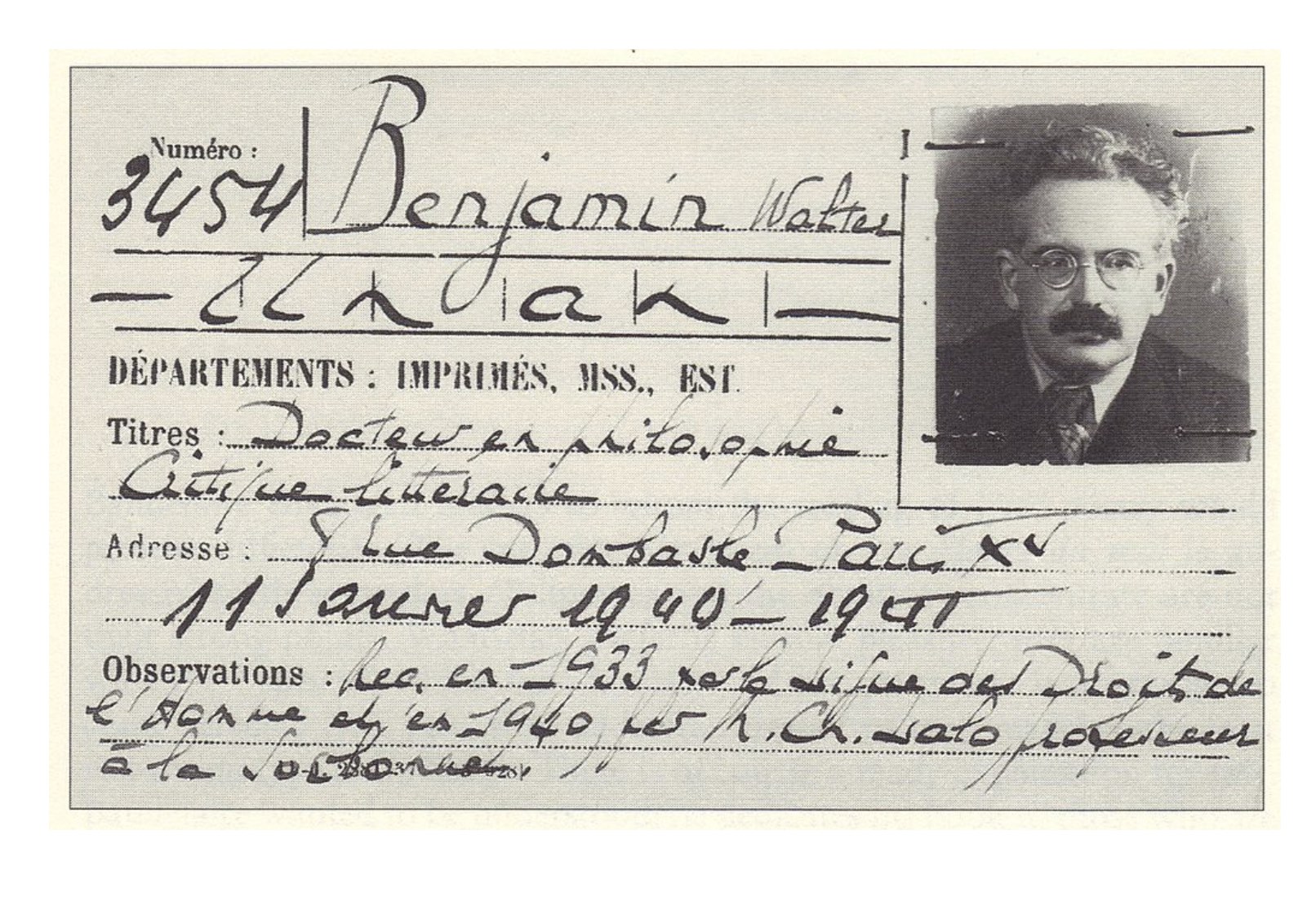
We welcome
ghosts on our editorial board. Susan Sontag,
Walter Benjamin, John Berger, Trinh
T. Minh-ha, Stuart Hall, Theresa Hak Kyung
Cha, Jose Guadalupe Posada, Manuel
Alvarez Bravo, Guillermo Kahlo, Rene
Magritte, Edmundo Desnoes, and others have
been invited.
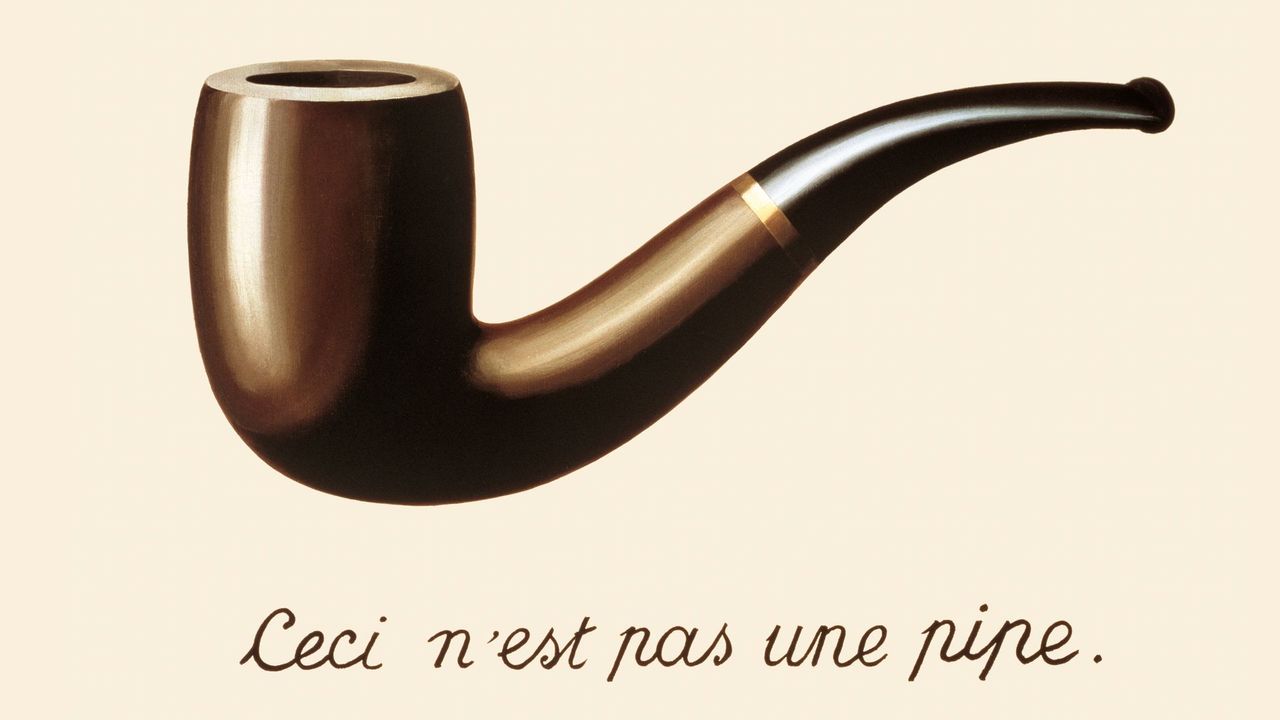
image: Rene Magritte, 1929, "The Treachery of Images"
CAPTION is an
evolving semiotic conspiracy.Those involved
include SDSU
Press, the MALAS
Program @ SDSU, ECL
@ SDSU, eLIT
& the Digital
Humanities @ SDSU.
|
Enjoy studying visual cultural studies? Come join our ever unfolding semiotic
adventure with MALAS @ SDSU

List of prior backdrop wallpaper
graphics:
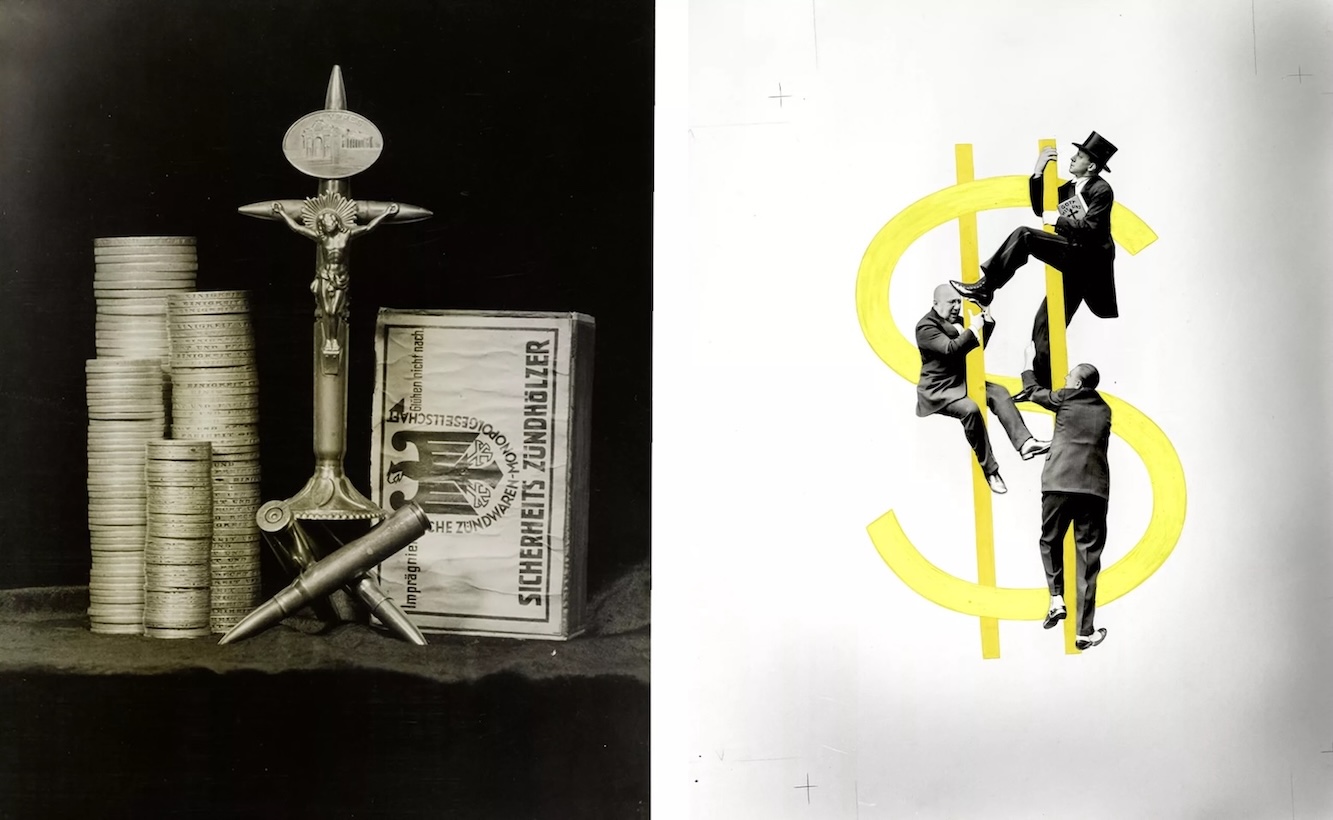
Rodchenko: https://sdsupress.sdsu.edu/caption/1rodchenko_flacon1930.jpeg
Heartfield: https://sdsupress.sdsu.edu/caption/1931-heartfield-possessions-les-plus-precieuses_1555.jpeg
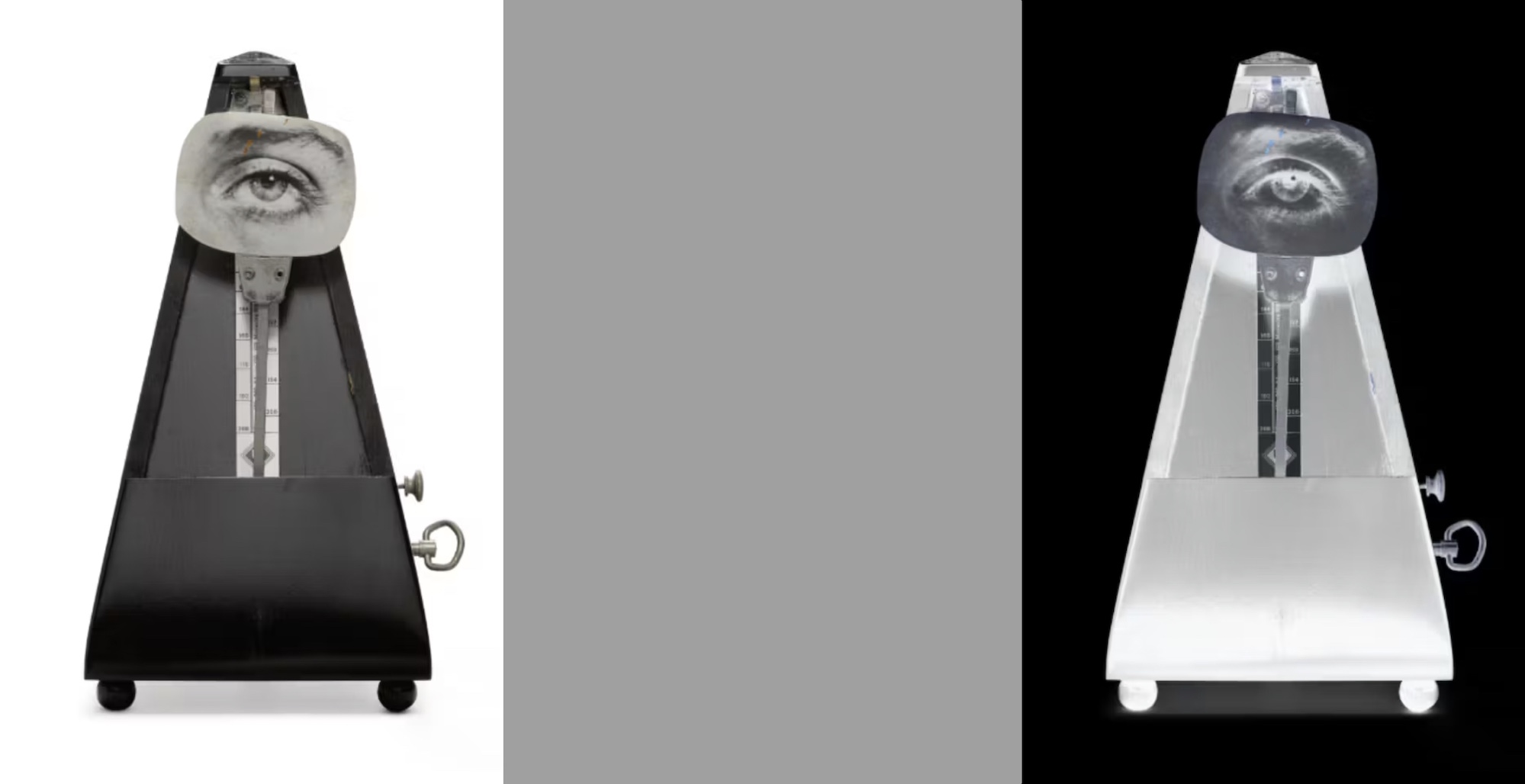
Man Ray: https://sdsupress.sdsu.edu/caption/1man_ray_indestructible.jpg
Francesca Woodman:
|