

book image
About the Book
Tijuana 1964: Una Visión Fotográfica e Histórica / A Photographic and Historic View is less a nostalgia album than a time capsule of a city caught in the act of becoming something much larger. Harry Crosby photographed Tijuana in June 1964, when the city had roughly 235,000 residents and a still-legible urban center. His camera moves well beyond the familiar tourist strip into markets, shops, streets, neighborhoods, cemeteries, new construction, informal settlements, and the ordinary traffic of daily life.
The book pairs Crosby’s black-and-white photographs with a bilingual historical essay by Paul Ganster, David Piñera Ramírez, and Antonio Padilla Corona and two maps. Together, image and text recover a Tijuana that was already double-facing: deeply connected to visitors and commerce from north of the border, yet simultaneously a Mexican city with its own social, economic, cultural, and civic life. The photographs make that doubleness visible without reducing the city to it.
Seen now, the images carry another charge. Crosby photographed a Tijuana on the verge of enormous demographic, industrial, and spatial transformation. Dirt roads, modest street commerce, mid-century architecture, new public services, Avenida Revolución, and expanding colonias coexist in the frame. The result is both documentary evidence and visual history: a portrait of urban change before hindsight had decided what mattered.
The 1964 Assignment: 720 Photographs
The project began not as a book but as a magazine assignment. In 1964, California Review editor James Britton asked Crosby to make a photographic essay on Tijuana for readers north of the border. Crosby later recalled that the photographic image of the city available to outsiders was dominated by bullfights, horse racing, nightclubs, and other tourist clichés. He took the assignment as an opportunity to photograph the city itself.
Over roughly two weeks in June, Crosby worked across Tijuana from early morning into the night, photographing people and places across social classes: vendors and pedestrians, stores and restaurants, banks and bars, cemeteries, middle-class districts, poor neighborhoods, new buildings, deteriorating structures, and the changing urban landscape. He produced about 720 black-and-white photographs. The original magazine used only a selection; decades later, that much larger archive became the reservoir from which Tijuana 1964 could be made.
From Book to Exhibition to Commemorative Edition
As Paul Ganster explains in his preface, the first SDSU Press / Institute for Regional Studies of the Californias edition was designed to present Crosby’s remarkable June 1964 photographs in historical context. Published in 2000, it brought 42 photographs together with a bilingual essay by Ganster, David Piñera Ramírez, and Antonio Padilla Corona. Its publication was accompanied that October by an exhibition of selected images organized by Tijuana’s Casa de la Cultura.
As the fiftieth anniversary of Crosby’s photographs approached, the original collaborators began imagining the book again. Pedro Ochoa Palacio, then Director General of the Centro Cultural Tijuana (CECUT), proposed a new collaboration, and the result was the 2014 commemorative edition: 20 additional photographs from Crosby’s same two-week June 1964 shoot, three replacement images for technical reasons, and revised historical text addressing the transformations visible in Tijuana after half a century. Published by CECUT, IRSC, and SDSU Press, the expanded edition makes an already unusually beautiful photographic book an even fuller visual record of the city.
The photographs have continued to live outside the covers. In 2020, the La Jolla Historical Society mounted Tijuana 1964: The Photography of Harry Crosby, bringing more than sixty images from the archive into the gallery and pairing the historical project with a contemporary youth-photography response. In 2022, CECUT exhibited 24 Crosby photographs as part of a binational program marking two centuries of Mexico–United States diplomatic relations. What began as a local magazine assignment had become a durable piece of cross-border visual memory.
Inside Tijuana 1964
These plates show why the book works as more than documentary evidence: Crosby’s Tijuana is built from faces, streets, objects, architecture, commerce, and the small visual accidents of daily life. The commemorative edition gives that photographic argument more room to unfold.
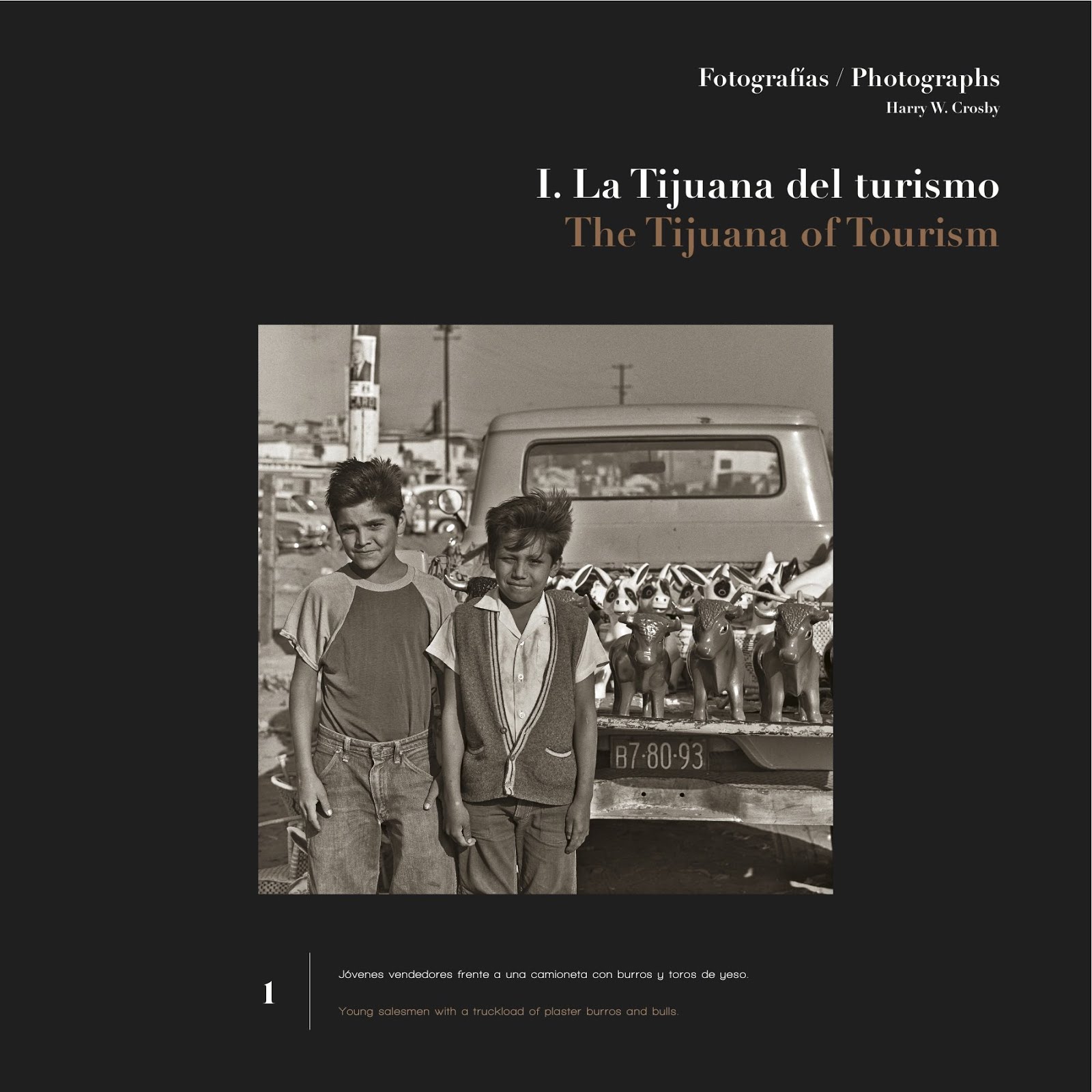
Jóvenes vendedores frente a una camioneta con burros y toros de yeso.
Young salesmen with a truckload of plaster burros and bulls. · Harry W. Crosby, 1964
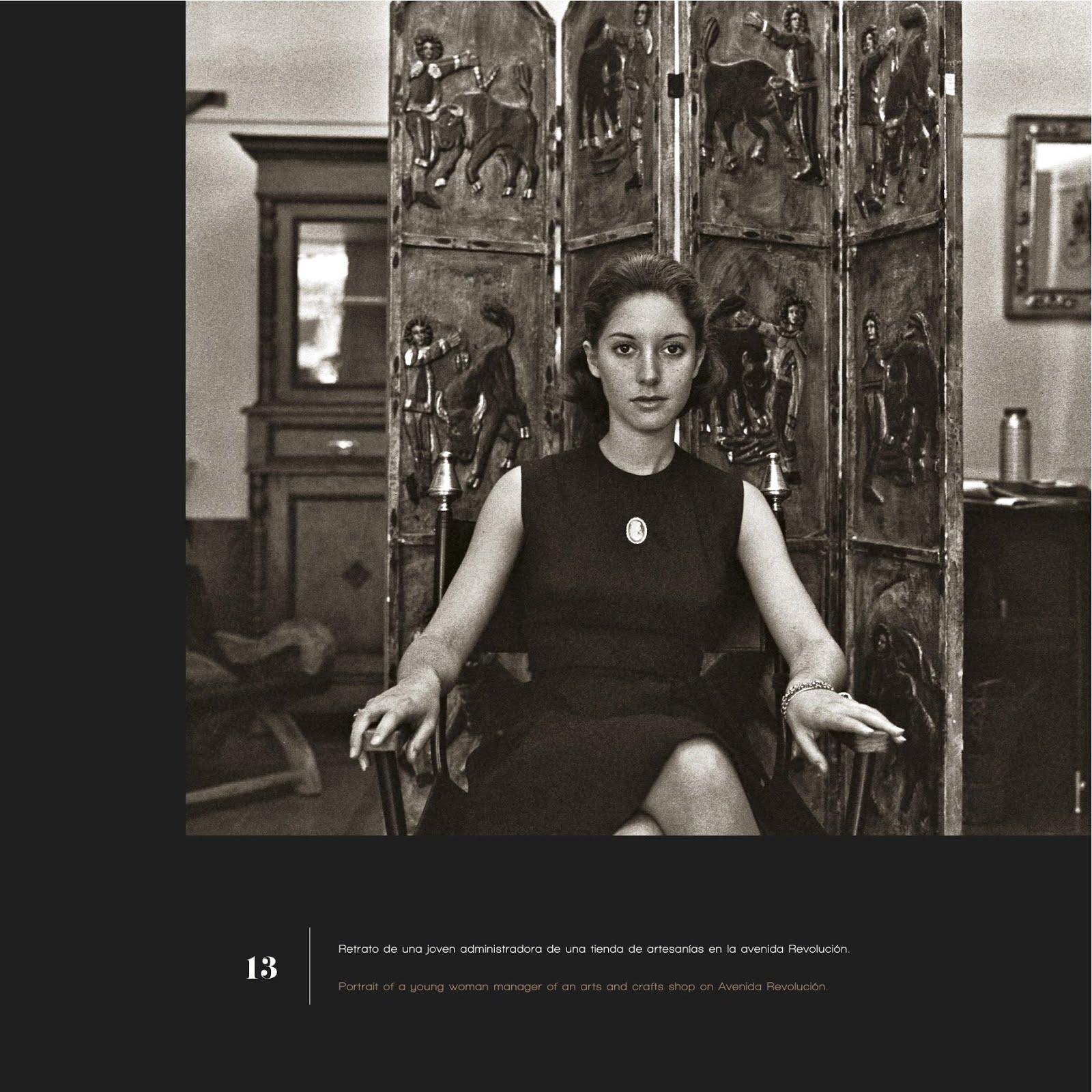
Retrato de una joven administradora de una tienda de artesanías en la avenida Revolución.
Portrait of a young woman manager of an arts and crafts shop on Avenida Revolución. · Harry W. Crosby, 1964
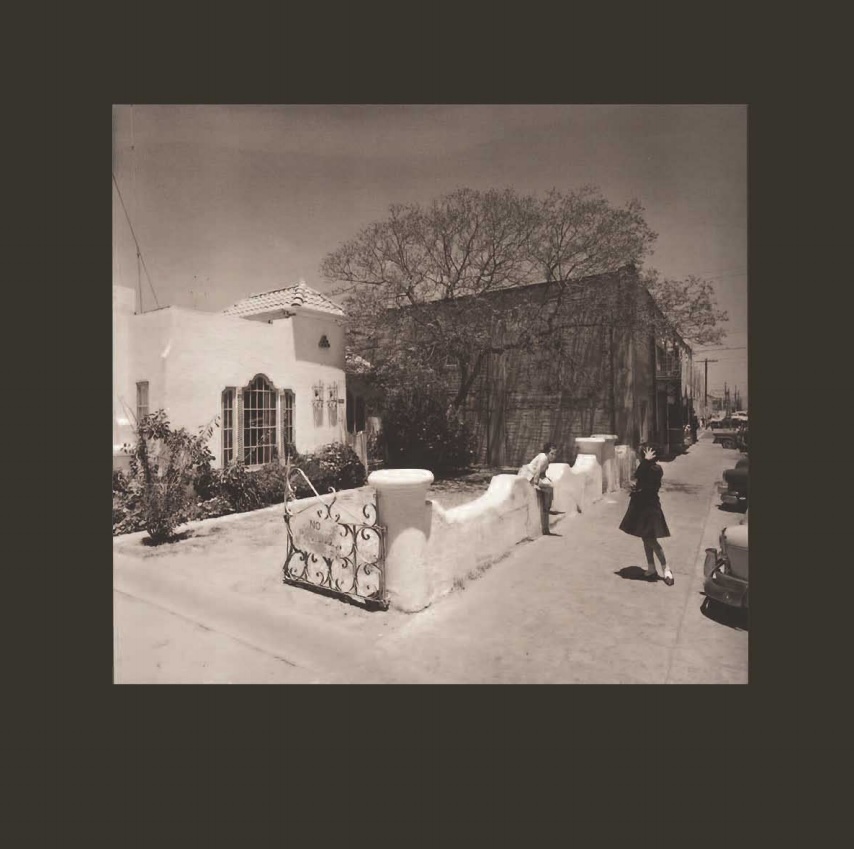
A Tijuana street scene from Crosby’s 1964 photographic record.
About Harry Crosby
Harry W. Crosby (1926–2024) was a photographer, historian, writer, and one of the great visual chroniclers of Baja California. Raised in La Jolla, he graduated from La Jolla High School and Occidental College and taught science before turning to photography full time. The Tijuana assignment came early in that second career and already shows the method that would define much of his later work: sustained attention to place, people, landscape, and the historical life visible in ordinary details.
Crosby went on to produce major photographic and historical works on Baja California, including The King’s Highway in Baja California, The Last of the Californios, and Antigua California. His life and work were later the subject of the documentary The Journeys of Harry Crosby, broadcast by KPBS.

Harry W. Crosby y Baja California / Harry W. Crosby and Baja California · biographical spread from the volume