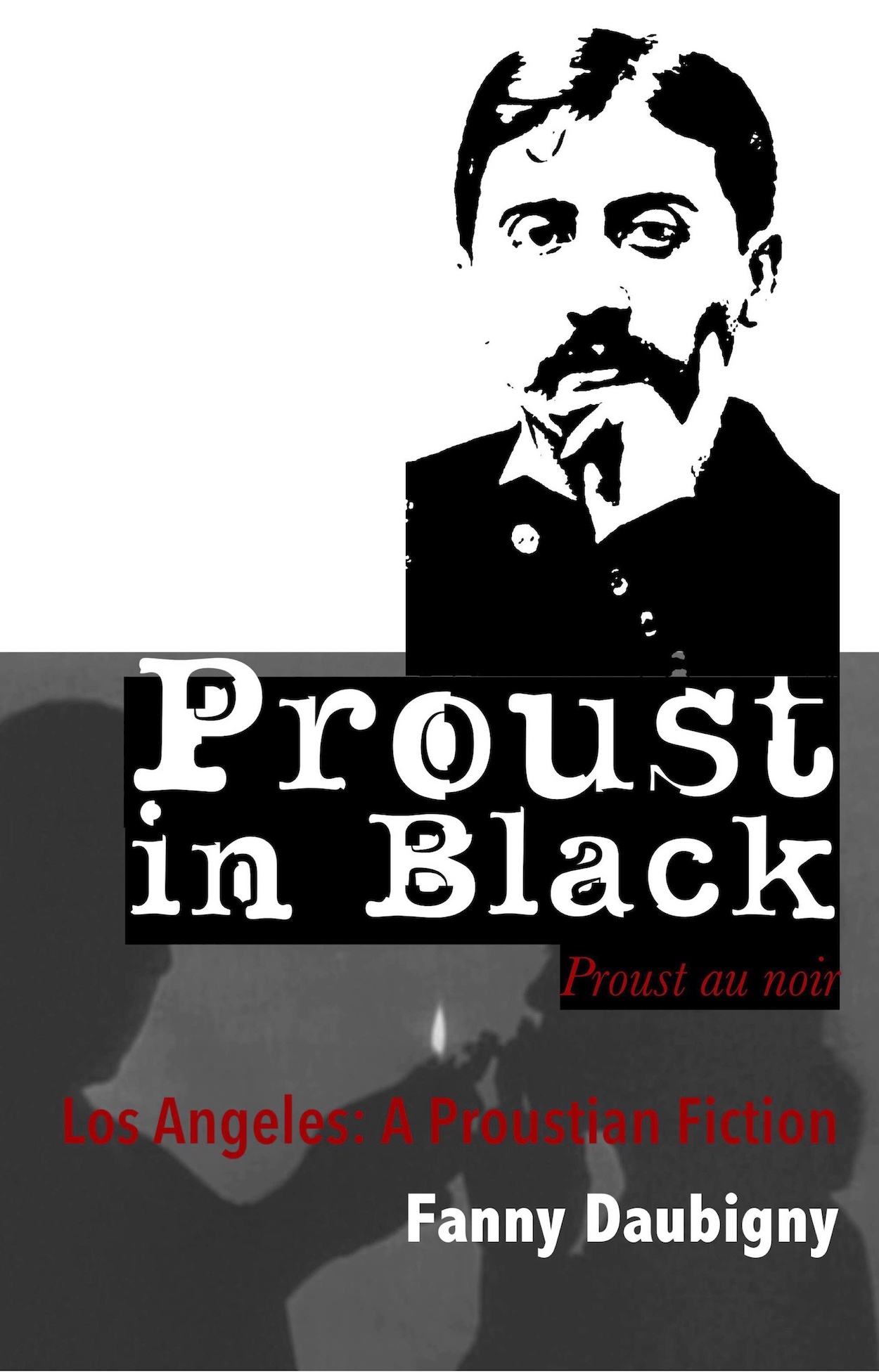
What happens when Marcel Proust enters the shadows of Los Angeles? Fanny Daubigny brings French literature into conversation with Hollywood noir, tracing memory, desire, and the mysteries of consciousness across the page and screen.
Translated by Bruce Whiteman, Proust in Black makes cultural criticism a literary encounter: Proust, Billy Wilder, and the cinematic city meet in an illustrated study of how we remember, imagine, and read the dark.
The special edition is printed on gloss archival paper. Both editions: Hyperbole Books / San Diego State University Press, 2019. Amazon pricing may vary.
In conversation · Aztec Paper · May 8, 2019
Fanny Daubigny on Proust, noir, and the city of night
“Los Angeles has the texture of a dream-like reality. Never completely real, never completely fake.”
— Fanny Daubigny
In this SDSU Press interview, conducted in February 2019, Daubigny describes the personal stakes of Proust in Black: her attachment to Los Angeles, her experience of migration, and her wish to bring poetry and feeling into literary criticism.
The conversation ranges from the city’s precarious geography and Cold War anxieties to changing screen detectives, Proust’s sleepless narrator, and the political questions woven through his fiction. It offers a particularly revealing entry into the book’s crossing of cultures and genres.
Coburn follows the book through insomnia, dreaming, sexuality, and fear, examining how Daubigny places Proust alongside European and Los Angeles film noir. Her essay focuses on the uncertainty of truth and the detective story’s relationship to cultural change.
Writing from her own familiarity with Los Angeles film culture, Brosnan considers the book’s cinematic settings and its reading of In Search of Lost Time. She highlights the connection between memory, intimate experience, and the city’s atmosphere after dark.
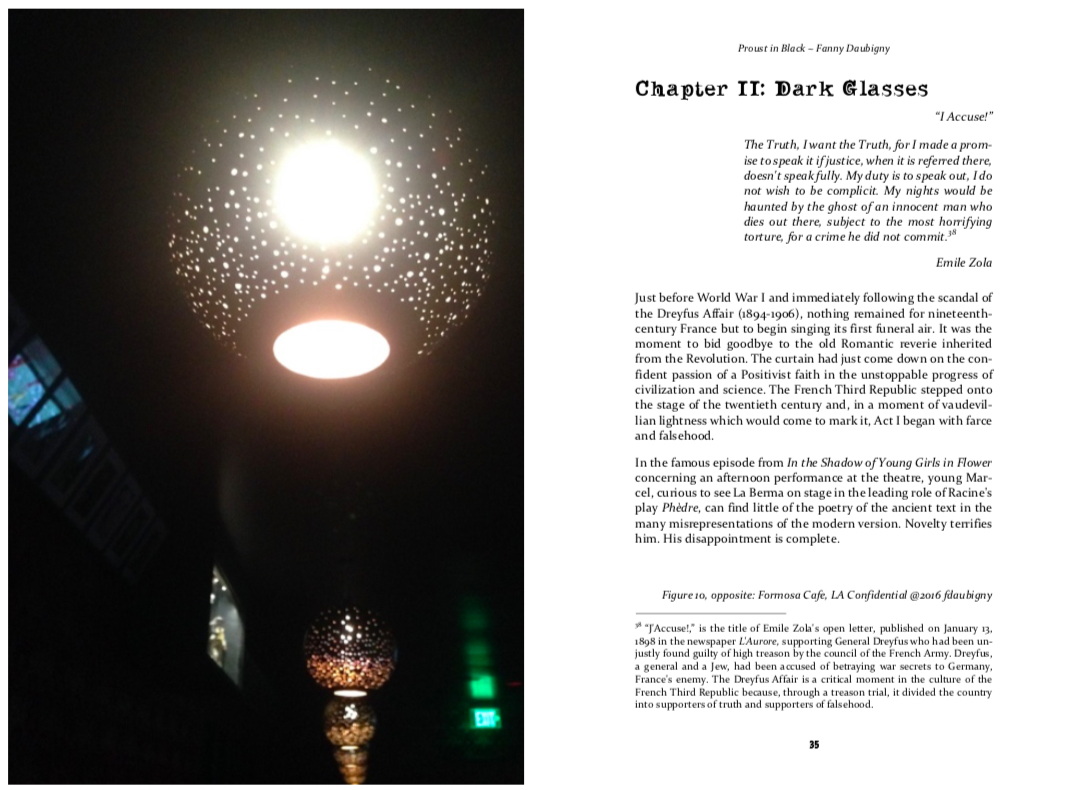
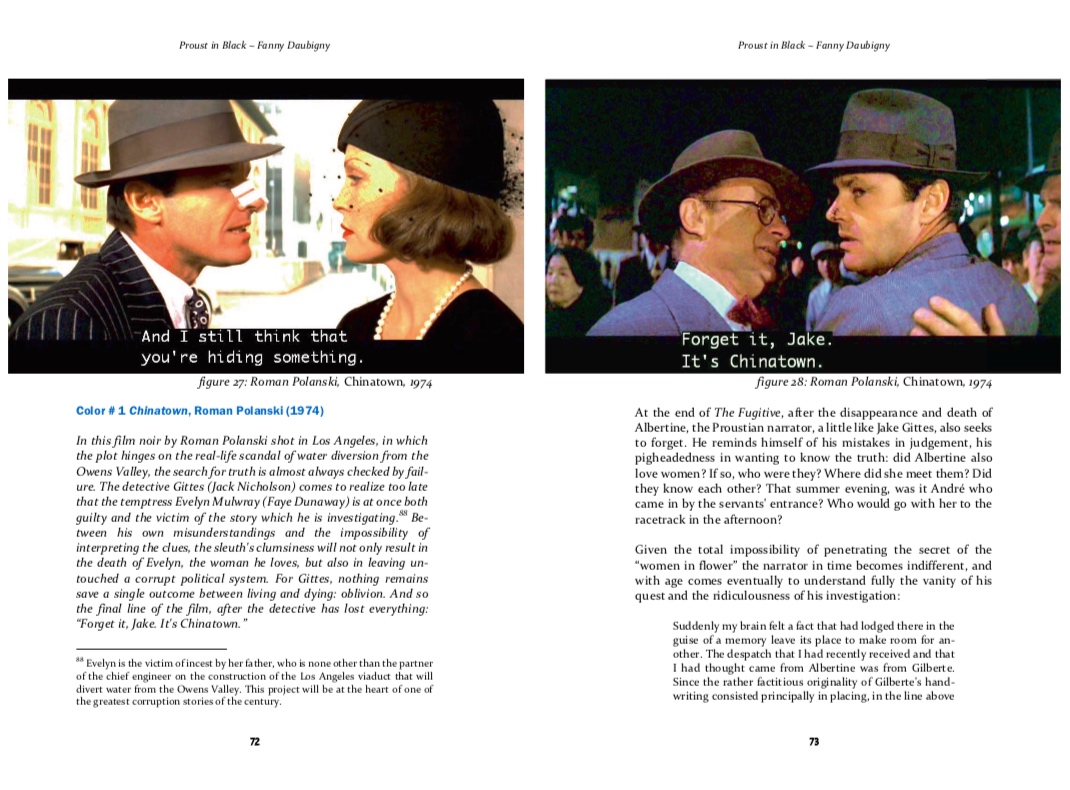
Sample spread 1 · click to enlargeSample spread 2 · click to enlarge
About Fanny Daubigny
Fanny Daubigny is a writer, translator, poet, and scholar of French literature. Her work includes studies of Marcel Proust and nineteenth- and twentieth-century French and Francophone writing. The Press’s author interview introduces her as a professor at California State University, Fullerton, and a Los Angeles–based writer.