
About the Book
English
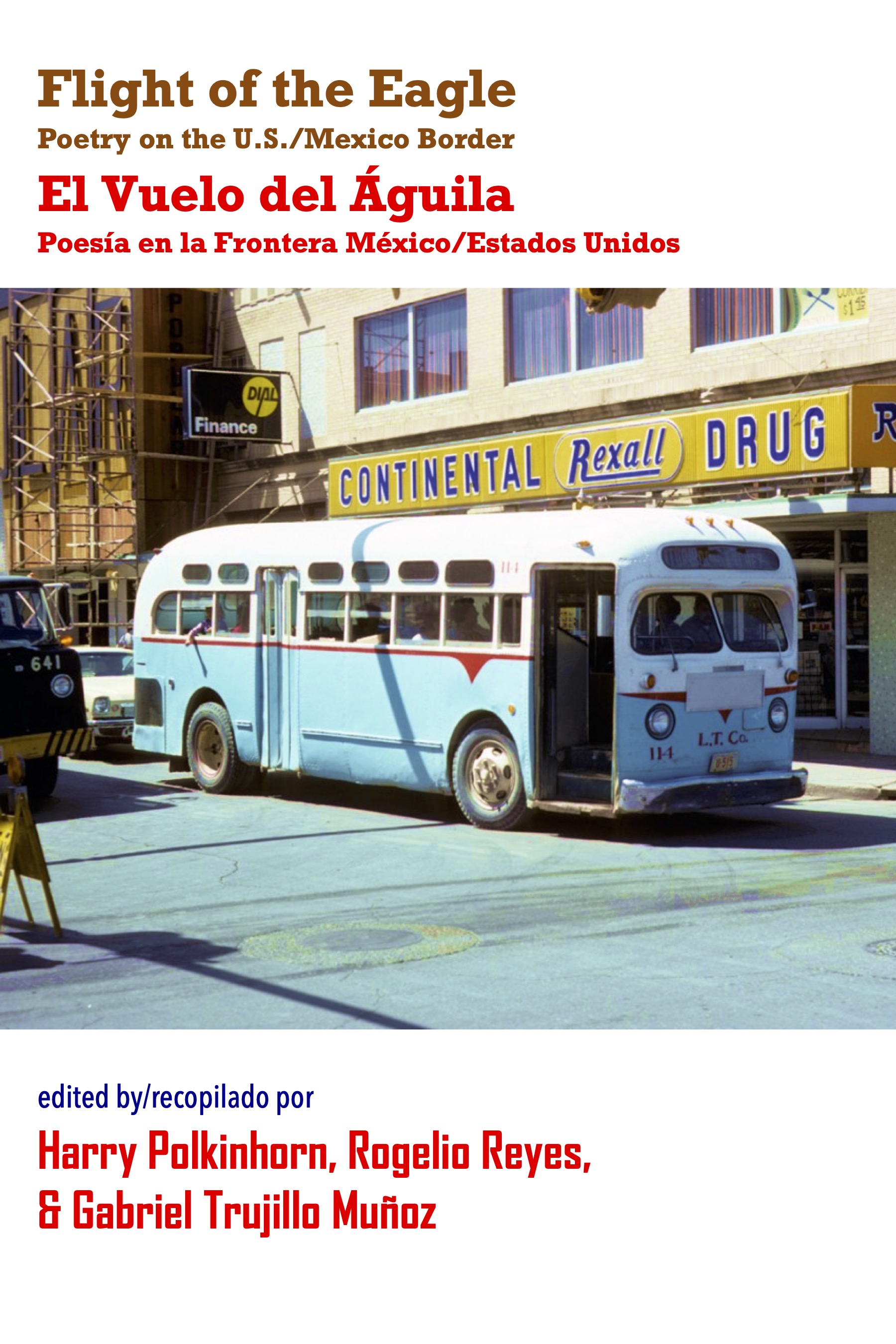
The Flight of the Eagle / El vuelo del águila gathers eight poets from Mexico and the United States and refuses to make them perform a single, tidy version of “border poetry.” Alfredo Espinosa, Alejandro Aguilar Zeleny, Juan Antonio Di Bella, and Jorge Ortega write from the Mexican side of the anthology; Ramón García, Jayne Relaford Brown, Sarai Austin, and José Montalvo enter from the United States. Set beside one another, their poems turn the border from a line on a map into a field of voices, memories, bodies, languages, losses, migrations, and competing cultural inheritances.
An SDSU Press / Aztec Paper retrospective on the book makes the anthology’s reach especially clear: its borders are not only national. The poems move through citizenship, adaptation, cultural collision, mistreatment, family, love, sex, heartbreak, pain, death, and war, while also opening onto liminal spaces of sexuality, race, culture, and gender. That range is precisely the point. The border becomes a way of thinking about the thresholds people carry within themselves as much as the international line they cross.
Published through Binational Press / Editorial Binacional, the collection is also an editorial argument about literary geography. Poetry from Calexico, Mexicali, San Diego, Tijuana, and the wider borderlands cannot be contained adequately by a single national tradition. The Flight of the Eagle asks readers to listen across the line—and, in the case of poet and activist José Montalvo, the Press’s archive preserves the invitation to hear the poet’s own voice as well.
Español
The Flight of the Eagle / El vuelo del águila reúne a ocho poetas de México y Estados Unidos y se niega a obligarlos a representar una sola versión ordenada de la “poesía fronteriza”. Alfredo Espinosa, Alejandro Aguilar Zeleny, Juan Antonio Di Bella y Jorge Ortega escriben desde el lado mexicano de la antología; Ramón García, Jayne Relaford Brown, Sarai Austin y José Montalvo entran desde Estados Unidos. Puestos en proximidad, sus poemas transforman la frontera de una línea en el mapa en un campo de voces, memorias, cuerpos, lenguas, pérdidas, migraciones y herencias culturales en tensión.
Una retrospectiva de SDSU Press / Aztec Paper deja especialmente claro el alcance del volumen: sus fronteras no son únicamente nacionales. Los poemas atraviesan ciudadanía, adaptación, choque cultural, maltrato, familia, amor, sexo, desamor, dolor, muerte y guerra, y al mismo tiempo se abren hacia espacios liminales de sexualidad, raza, cultura y género. Esa amplitud es precisamente el argumento. La frontera se vuelve una manera de pensar los umbrales que las personas llevan dentro de sí tanto como la línea internacional que cruzan.
Publicado por Binational Press / Editorial Binacional, el libro también plantea un argumento editorial sobre la geografía literaria. La poesía de Calexico, Mexicali, San Diego, Tijuana y las zonas fronterizas más amplias no cabe adecuadamente dentro de una sola tradición nacional. El vuelo del águila pide al lector escuchar a través de la línea y, en el caso del poeta y activista José Montalvo, el archivo de la editorial conserva también la invitación a escuchar la voz del propio poeta.