
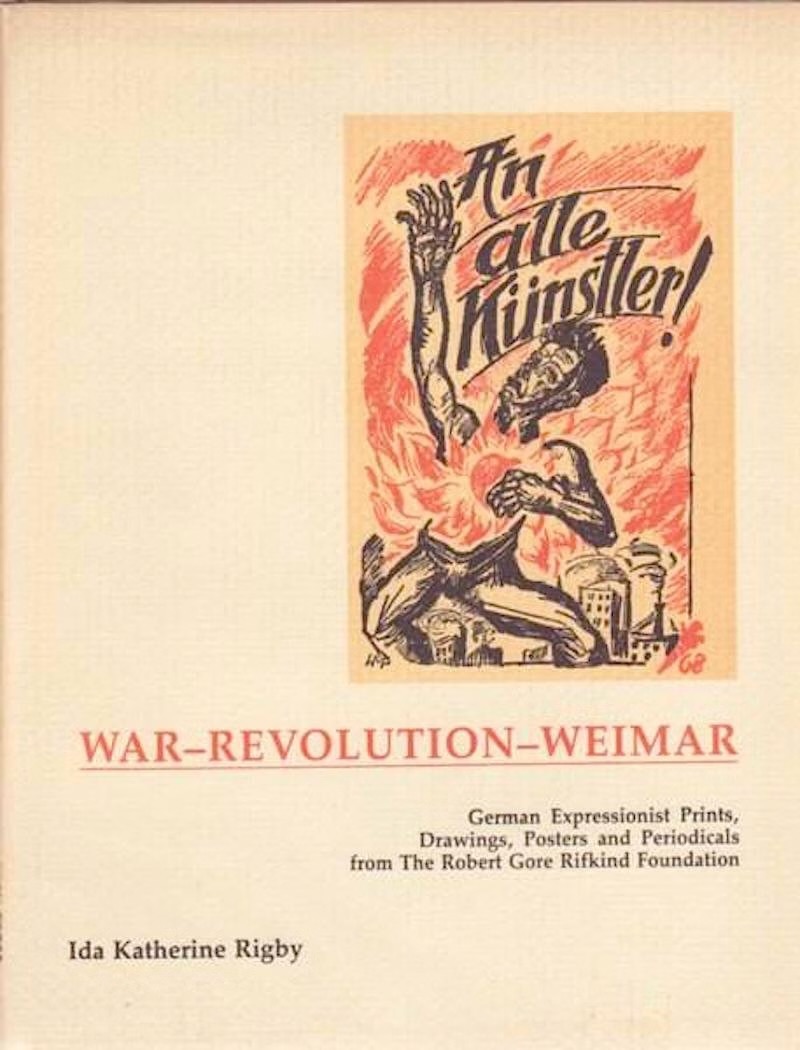
front cover · click to enlarge
A study of German Expressionist prints, drawings, posters, and periodicals from the Robert Gore Rifkind Foundation. Rigby reads the graphic culture of 1918–1922 against the political and social crisis that followed Germany's defeat in World War I, tracing artists' attempts to join aesthetic experiment to social reform and their later movement toward a more disillusioned realism.
The volume is especially valuable for refusing to reduce German Expressionism to its most famous names. Alongside Käthe Kollwitz, George Grosz, and Otto Dix, it gives sustained attention to lesser-known artists whose work can make the period's mixture of revolutionary hope, anguish, satire, and political urgency newly visible.