
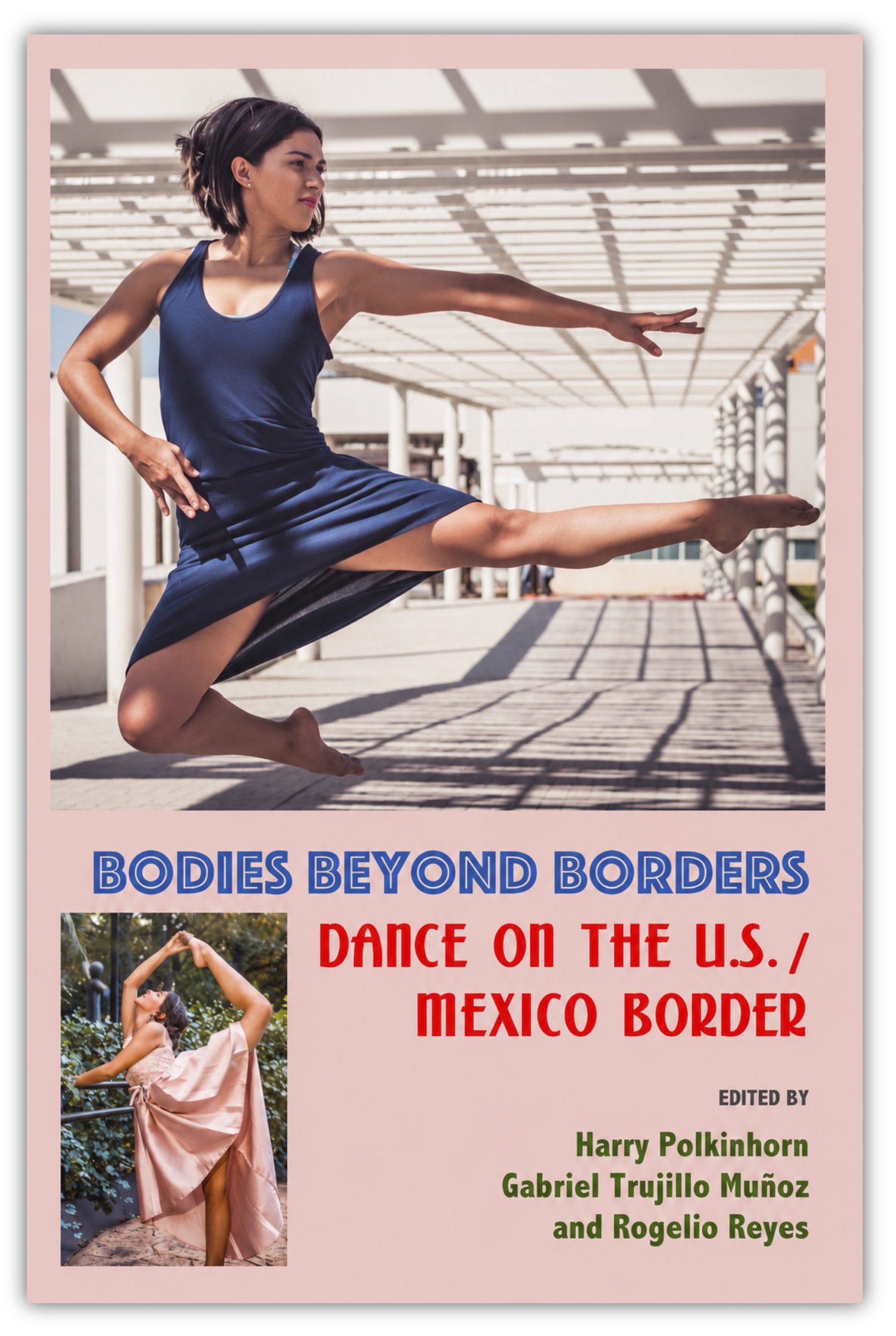
About the Book
Before politicians turned the border into a permanent theater of fear, dancers on both sides were already rewriting its choreography. Sin permiso. Sin pasaporte. Sin pedir perdón.
The year was 1994. NAFTA was rearranging the economic map of North America. The Zapatistas were rising in Chiapas. And along the U.S.–Mexico border, another revolution was unfolding—not with rifles or trade agreements, but with bodies in motion. Bodies that refused to stay in their assigned places. Bodies that remembered what official histories preferred to forget. Bodies that understood something governments never quite grasp: la cultura no necesita visa.
Published at this extraordinary historical crossroads, Bodies beyond Borders: Dance on the U.S.–Mexico Border is a provocative, bilingual gathering of dancers, choreographers, critics, and cultural insurgents exploring what happens when the human body becomes a language of resistance, desire, memory, and belonging. From Tijuana to San Diego, Mexicali to the larger landscapes of Mexican and American performance, these essays, interviews, and reflections reveal a borderlands dance culture that refuses to be confined by geography, nationality, or the polite expectations of the cultural establishment.
And what a company of provocateurs! Patricia Cardona, the pioneering scholar of Mexican dance and theatrical anthropology who would later direct Mexico’s national dance research center, brings her formidable intelligence to the body’s expressive possibilities. Jean Isaacs, who would become a defining force in San Diego contemporary dance and its celebrated Trolley Dances, joins a remarkable conversation with fellow choreographers Marylou Valencia, Maxine Mahon, and Victoria Hamilton. Gabriel Trujillo Muñoz, the prolific Mexicali intellectual who would later enter the Academia Mexicana de la Lengua, helps anchor the collection in the unruly cultural imagination of la frontera.
Their company includes César Delgado Martínez, Sergio Gómez Montero, Luz Mercedes López Barrera, and Harry Polkinhorn, among others, in a conversation that crosses languages, disciplines, and artistic traditions. Patricia Cardona’s “Something More Than Reptiles and Thistles” confronts the dancer’s body beneath the punishing desert sun; López Barrera’s “About Dancers” explores the charged encounter between performer and spectator; and interviews with choreographers illuminate the stubborn, exhilarating labor of making art where cultures collide.
This is not dance as decoration. This is dance as argument. Dance as testimony. Dance as the body thinking out loud.
More than three decades after its publication, Bodies beyond Borders feels startlingly contemporary. Its questions about identity, visibility, migration, cultural sovereignty, and the politics of public space have only grown more urgent. Long before the borderlands became fashionable academic territory, these artists were already inventing new ways of inhabiting them—one gesture, one performance, one deliciously disobedient movement at a time.
The sixth volume in the groundbreaking Binational Press / Editorial Binacional series, a collaboration between San Diego State University and the Universidad Autónoma de Baja California, this 324-page collection is both an invaluable historical document and a living invitation to rethink the geography of culture.
Borders divide territory. Bodies invent possibilities.
Que siga la danza. Que tiemble la frontera.