
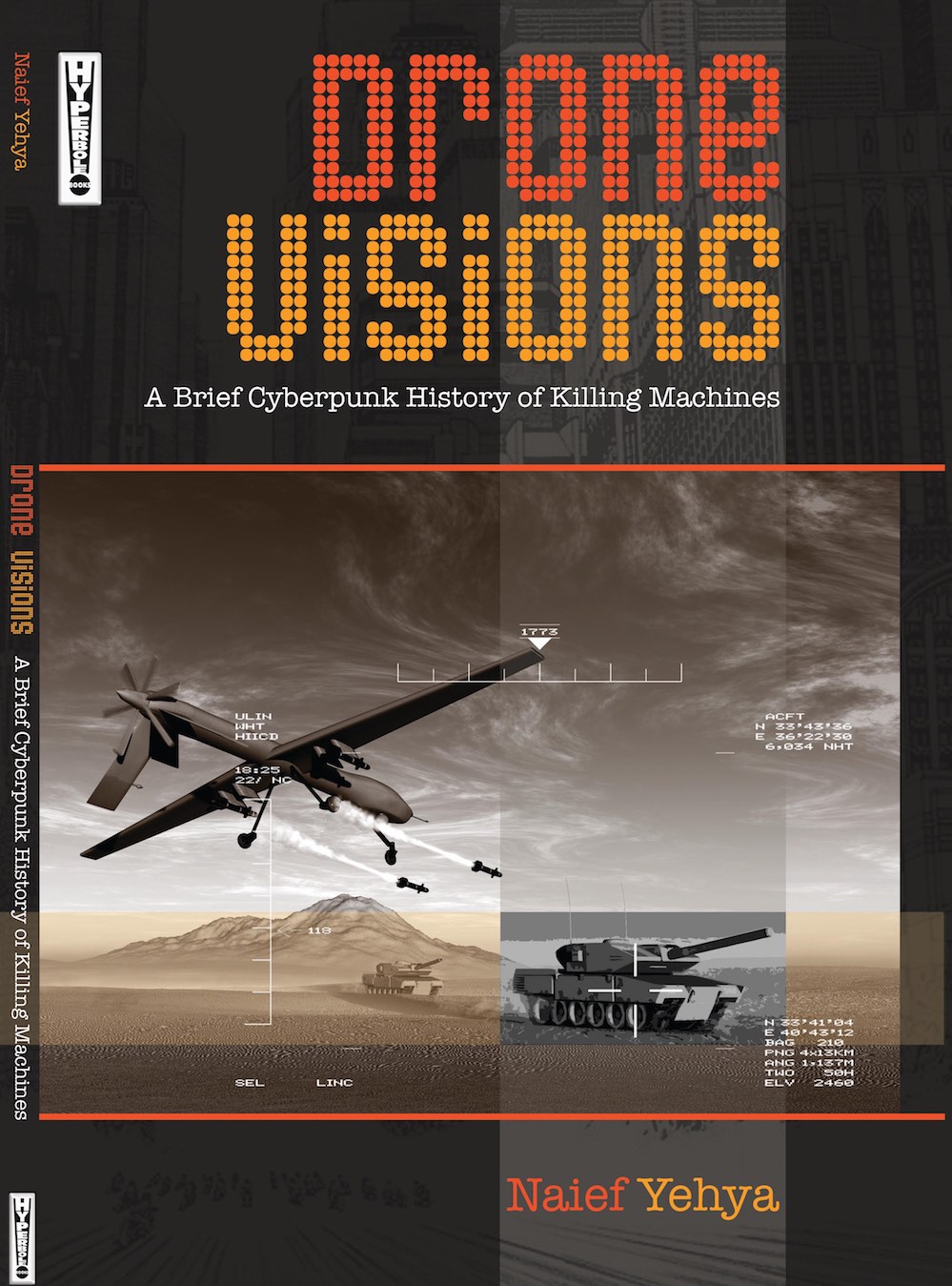
cover — click to enlarge
In Drone Visions, Naief Yehya — one of the sharpest analysts of technoculture — raises a poignant question: did 1980s cyberpunk lore spawn today's killing drones? In other words, does art imitate life (or should we say death)?
A lively and very smart synthesis of film criticism, political analysis, technology, science, and gender studies, these close readings zoom out to give us the big picture of the way we live now. Reading between the frames of canonical cyberpunk texts like Blade Runner, Alien, and The Terminator; "video-game" footage of smart-bomb strikes in the Gulf War; and documentary interviews with cubicle warriors who call their long-distance kills "bugsplats," Yehya tracks the predatory technologies that have stalked us in our dreams ever since Frankenstein.
About the Author
A Brooklyn native (since 1992), Naief Yehya (Mexico City, 1963) is an industrial engineer, journalist, writer, pornographographer, and cultural critic. Best known for his collections in Spanish including Pornocultura: el espectro de la violencia (2013), Guerra y propaganda (2004), and Pornografía: obsesión sexual y tenológica (2012), Yehya's work in fiction and non-fiction deals mainly with the impact of technology, mass media, propaganda and pornography in culture and society.